FACT-CHECK: Was US Vice President Vance Honest About Ukraine During His Hungary Visit?
No, he wasn’t. Mostly Vance offered up fibs and spins, and some stuff he just made up.
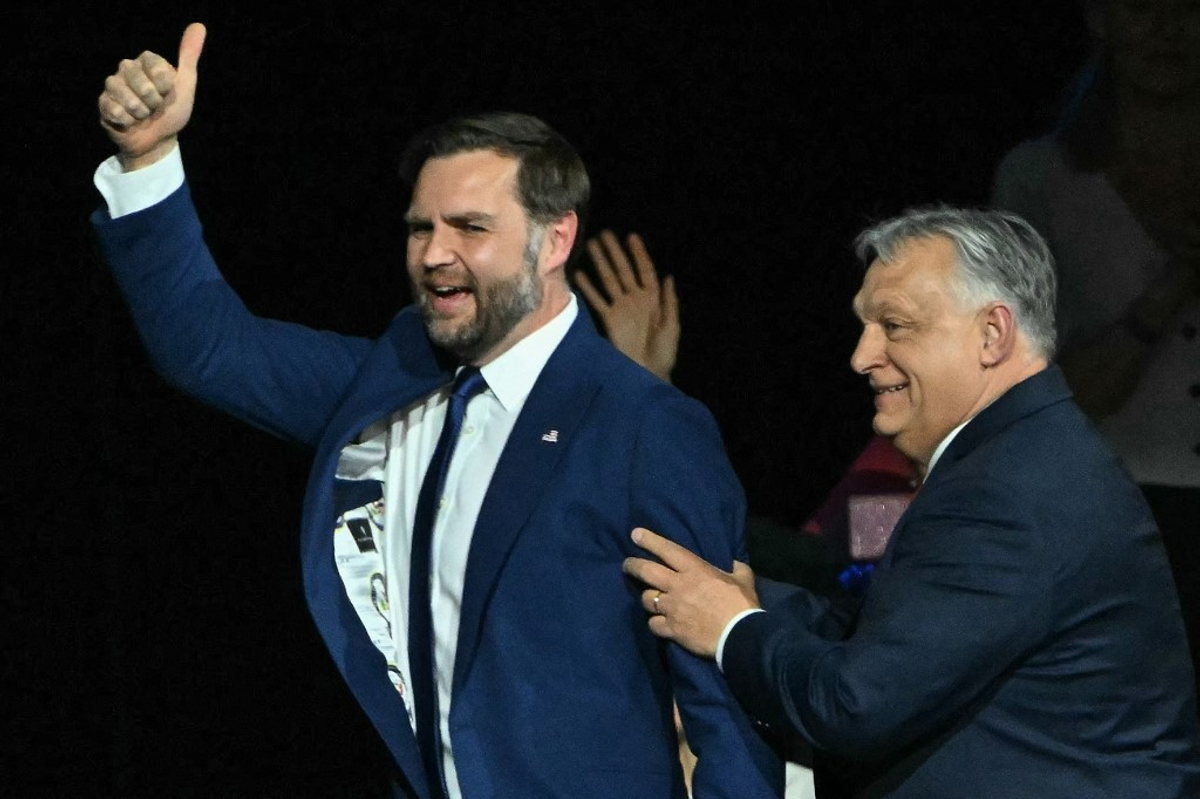
“What I would say to both the Russians and the Ukrainians: you know, at this point, we’re talking about bargaining over a few square kilometers of territory one way or the other. Is that worth the loss of hundreds of thousands of additional Russian and Ukrainian young men? Is it worth additional months or even years of high energy prices and economic devastation?
We believe the answer is clearly ‘no’. ” Broken down, this is how Vance departed from reality for his Budapest audience: State of the Russo-Ukrainian peace process and concessions made so far Vance: “Uh we have made significant progress…over time, their positions have gotten closer and closer together. ” In fact, progress has been close to nil and movement between the sides has been negligible, and by Russia not at all.
Advertisement Since Russia invaded Ukraine the second time in February 2022, there have been two concessions formally made, those by Ukraine: Agreement to a short-term ceasefire and to negotiation directly with Russia, prior to Russian evacuation of all Ukrainian territory. These two concessions went into effect in Mar.
2025. Core Russian demands to Ukraine are unchanged since the start of the full-scale war. Russia’s terms to Ukraine as stated by Kremlin officials including President Putin include: Full transfer of sovereignty from Ukraine to Russia of Ukraine’s Crimea, Zaporizhzhia, Luhansk, Donetsk and Kherson regions, in full, including territory not currently occupied by Russia.
Permanent Ukrainian neutrality and Ukrainian commitment never to join NATO or any other security alliance. Reduction of the Ukrainian military to the strength of a large police force and removal from the Ukrainian military of all long-range weapons “De-nazification” of Ukrainian law, in practice a term meaning any law preventing promotion of Russian interests by Russian agents inside Ukraine, in government, business or education, must be removed from the books.
Ukrainian guarantee of “rights” of Russian-speakers living in Ukraine, including the “right” for those Ukrainians receive Russian state funding in political campaigning in Ukraine, and the full access of state-controlled Russian media to Ukrainian media networks. Generally speaking, the Ukrainian terms to Russia are red lines to every Russian term to Ukraine.
In addition, Ukraine is demanding Russia pay reparations for Ukrainians killed and wounded and Ukrainian property destroyed or damaged. Aside from agreeing to participate in talks with Russian troops occupying Ukrainian territory, this Ukrainian position has been unchanged since 2022. How much land is at stake in the Russo-Ukrainian War Vance: “We’re talking about bargaining over a few square kilometers of territory one way or the other.
” In fact, the land space involved is very substantial and by most definitions massive. The territorial dispute between Ukraine and Russia – or more accurately the sovereign Ukrainian territory the Kremlin wants to make sovereign Russian territory – covers a land space of about 135,845 square kilometers, or about 52,450 square miles, i.e., Ukraine’s Luhansk, Kherson, Donetsk, Zaporizhzhia and Crimea regions.
Advertisement This is a land space slightly larger than all of England (130,310 square kilometers; 50,310 square miles) or Greece including all its islands (131,957 square kilometers; 50,949 square miles). The total territory of Vance’s home state Ohio is 116,096 square kilometers (40,987 square miles) is about 15 percent smaller, than the land the Kremlin is saying Ukraine should turn over to Russia.
Value of what is at stake in the Russo-Ukrainian War Vance: “ Is that worth the loss of hundreds of thousands of additional Russian and Ukrainian young men? ” In fact, with the qualification that it is impossible to assign a real monetary value on a human life, Vance’s messaging that little of value is at stake in the Russo-Ukrainian War is obviously and by many measures spectacularly wrong.
The territories Russia wants to take from Ukraine in terms of ore and growing potential are some of the richest on Earth. The Donbas (roughly, Luhansk and Donetsk regions) is overflowing with rich mineral deposits. All the Ukrainian territories coveted by Russia, save Crimea, are covered by black loam making what Russia wants one of the most agriculturally-productive swaths of land on the planet.
Advertisement A rough estimate of all the exploitable minerals and ore in the territories Russia wants would require proper surveying for an accurate figure, however, past estimates usually have placed the potential gain to Russia mining and ore-processing industry at above $15 trillion. The most prominent exploitable resources of the region, concentrated particularly in Donetsk and Luhansk regions and for the most part actively extracted until Russia invaded, include coal, lithium, iron ore, natural gas, titanium and zirconium.
Fully 25 percent of the world’s manganese reserves are in Ukraine’s Zaporizhzhia and Kherson regions. The best-known rare earth minerals thought to be present in economically-extractable deposits in these territories are Monazite, Xenotime and Bastnäsite. Displaced Ukrainians and the peace process: Vance: “….…………..
” In fact, Vance (and other US officials) have been absolutely silent on Ukrainians displaced by the war. The US Vice President in Budapest was talking like millions of Ukrainians uprooted from their homes and whose property and businesses were destroyed by Russia, don’t exist. The best-known Vance comment on Ukraine dates back to Feb.
19 2022, five days before Russia invaded Ukraine a second time and started a war that has now killed more than a million people, in which Vance told US Republican pundit Steve Bannon: Advertisement “I gotta be honest with you, I don’t really care what happens to Ukraine one way or another. ” Vance’s disinterest is not a minor detail.
The territory Ukraine and Russia are fighting over is one of the most densely populated in Europe. As a result of that combat, about 10-11 million Ukrainians have been forced to leave their homes, with about 5.3 million being displaced internally and 5.7 displaced externally. For Europe, this was the largest forced shift of populations since World War II.
According to Ukrainian estimates, the Russian invasion of Ukraine has caused about $195 billion of direct physical damage and $600 billion in total economic losses; these figures are generally supported by independent groups like the UN. 10-11 million people is roughly equivalent to the combined populations of Greater London and Birmingham.
In the continental European context, 11 million people is equivalent to the entire population of Paris, Madrid, Rome and Berlin combined. In the context of Vance’s home state, 11 million people is equivalent to 90 percent of the entire population of Ohio – forced from their homes, and practically all those people’s homes and businesses were destroyed without compensation.
Advertisement For the Trump administration negotiating team, patently, pretending 11 million displaced Ukrainians, and the homes and property they lost, are immaterial to the Russo-Ukrainian peace process, is a serious foreign policy misstep if not negligence. For Vance, a politician presenting himself to the public as a man of faith and Christian virtue, his failure to mention – ever – the plight of Ukrainians displaced from their homes by an unprovoked Russian invasion, at minimum undermines his credibility.
Hungary is an honest broker between Russia and Ukraine Vance: “Viktor (Orbán) is the one who’s encouraged us to truly understand this, to understand from the perspective of both the Ukrainians and the Russians what is necessary for them to end the conflict. ” In fact, since taking power in 2010 in Hungary Prime Minister Orbán and his government have placed themselves decisively in the Kremlin’s orbit.
Among other evidence of Orbán/Hungarian bias towards Russia include:
Читайте також
- Російська армія втрачає контроль: війна наближається до критичної точки
- US Intercepts Sanctioned Tanker Linked to Russia’s Shadow Fleet
- Crisis in Ukraine-Israel Relations Looms as Second Vessel Carrying Ukraine’s ‘Stolen Grain’ Enters Haifa
- Ukraine Busts Drone Theft Scheme Worth Over $370,000 in ‘Army of Drones’ Program
- Журі Венеційської бієнале пішло у відставку перед відкриттям
Новини цього розділу
 "Обвал економіки зупинить ОПК": Dragon Capital – про сценарій війни до кінця 2027 року
 Охочих зануритися в XIX сторіччя і постріляти з гармати шукають на Мальті
 Позиції Верховного Суду щодо батьківства та місця проживання дітей
 Бізнес та влада можуть подавати заяви в Реєстрі збитків
 Конкурс до апеляцій: двоє підтвердили, а двоє йдуть на «пленарку» (прізвища)
 Судді Дніпровського АС пройшли співбесіди у ВККС
 Домашніх вихованців захистили від негуманного поводження в ЄС
 Як довго тривають припливи у жінок: все про тривалість та причини
 Вживання меду може позбавити організм важливих вітамінів
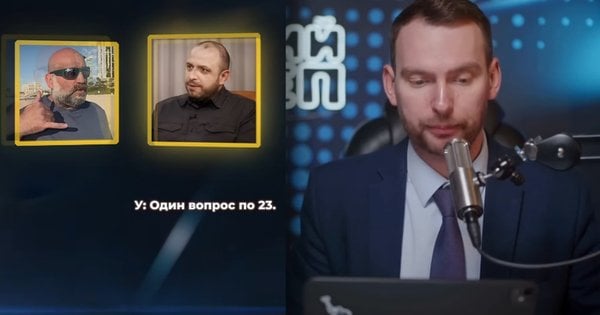 Нардеп Железняк оприлюднив нові записи розмов Міндіча та Умєрова

Коментарі
Коментарів ще немає. Будьте першим у цій дискусії.